Showing posts with label Tech. Show all posts

Thursday, April 11, 2013

"SQL Injection" Viruses Still Going Strong

Sometimes called "mass-injection attacks," this class of internet-based computer attack appears to be responsible for the recent crippling of St. Edward's University's "New Literati" online literary adventure. Although not technically a "virus" (though certainly malware), this type of computer bug infects web servers, from which it tries to exploit user traffic through various means, often redirecting users to other malicious websites that may try to trick them (via misleading pop-up alerts or various scare tactics) into downloading more directly exploitative software like fake Anti-Virus platforms. How the New Literati website became compromised is not yet entirely clear, but blogs and other web presences that are easily modifiable by relatively amateur computer users are frequent victims of such attacks. Naive data processing in basic webpage authoring tools is one way hackers gain access, where malicious code "escapes" its proper place in a computer and can gain access to system processes, as in this somewhat humorous attempt:
Hackers don't usually target traffic cameras, though; one of the last big outbreaks was the so-called LizaMoon attack in the spring of 2011, where possibly millions of websites were infected (PCWorld), and users of those websites were bounced around the internet (often unknowingly, in hidden website frames or invisible pop-up windows) until they were presented with this official-seeming notice:

And shortly invited (read: "extorted") to purchase a "solution":

Being hacked, scammed, or even targeted can be scary, but trusting random pop-ups is probably not the best way to soothe your fears. So watch your virtual backs, keep your anti-virus software up to date, but above all surf responsibly. (No (sorry), you are NOT the 1,000,000th visitor, nor have you won a prize. And pressing "Escape" is usually the best way to close an unwelcome faked system alert.)

Thursday, March 28, 2013

Dinosaurs, Desktops, and Other Relics

I've already established that I might never buy a traditional TV or internal combustion engine ("ICE") car, and now find myself wondering about the venerable desktop computer. My school is leaning toward the "all-in-one" format for some computer labs, smartphones are on the rise, tablets are stealing marketshare from netbooks from laptops from desktops.

Even console computing is experiencing a resurgence in which a user has direct control over little more than a mouse, keyboard, and monitor, while storage and processing are largely handled over a network or by another remotely-connected device. Does "cloud computing" ring a bell for anyone?

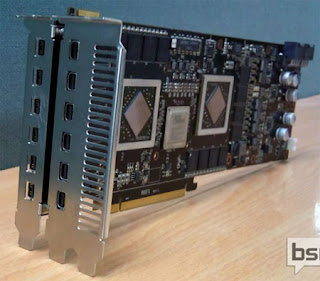
Having fried my own little netbook, I recognize that desktops are still superior for flexibility and upgrade options, but wonder if they'll wind up dinosaurs maintained only by gamers and "power users" who need (or think they need) a half-dozen or more drives, or heavy-duty graphics cards.
http://www.behardware.com/news/10920/a-5970-for-12-screens-from-powercolor.html

I think that if a format other than desktop ever cracks the general business / commercial threshold, then desktops will certainly see downgraded prestige, but for now they're (barely) hanging in there.

Tuesday, February 19, 2013

Hypercapacitors

Ok, my little slice of the internet looks like it may be in danger of becoming The Electric Car Blog, but would that really be so bad?
Knowing my proclivities, my good friend Cameron Gordon (the actor, not the mathematician) shared with me this little blurb about the rise of cheap Supercapacitors / Ultracapacitors / Whateverintensifieryouwanttousecapacitors.
To clarify, these are not the devices that send your DeLorean back to the future, but big brothers of the little things inside your TV or computer that can make it hazardous to open the case months after the device was unplugged due to their ability to charge (and discharge!) rapidly. This technology has long seemed the obvious answer to the problem with electric cars -- even with reliably-spaced charging points, a long-distance trip becomes an exercise in tedium while you wait for your car's batteries to charge before you can speed off again. You may recall my last post about the Tesla Model S kerfuffle, where the New York Times reviewer failed to fully charge the batteries, thereby screwing up Tesla's mileage calculations and instigating the whole thing. (On a side note, perhaps it wasn't the BEST design strategy to have the car's dashboard interface read "Charge Complete" while the battery meter reads only 90%, but without such ambiguity, we wouldn't have all these fun semantic arguments to keep us entertained.)

And if you watch the video (hidden above under the Supercapacitors link), you may note that the graphene substrate used is fabricated using a consumer-grade Lightscribe DVD burner. So buy whatever kind of stock you want, or maybe just go to your local electronics dealer and see if you can corner the market.
And if you're not clicking all my links anyway, you're missing out.

(Note: the white lightning bolt car is a Shelby Aero EV. Not actually powered by capacitors... yet... cuz then it'd be even FASTER.)

Saturday, February 16, 2013

It IS electric!

Wow, what a watershed week for the electric car! I try not to use exclamation points on this blog overmuch, but wow, wow, wow. Tesla Motors has gone to war with the New York Times, and seems to be winning.

It wasn't so recently that electric cars (or EVs) were "Three-wheeled bubble things that were slow and kind of silly" (Tesla promotional video), and that an American car driver who wanted to break free of internal combustion engines would have to build his own Frankenstonian conversion or do something silly:
Yes, that is a Porsche/bike.

Anyway, Tesla Motors made one of the first and best electric cars of the modern era, the Tesla Roadster.

0-60 in 3.9 seconds, 244-mile range. Bam.
The roadster was the motivating icon of the modern EV movement, paving the way for plug-in hybrids like the Chevy Volt and true EVs like the Nissan Leaf. While out of the everyman's price range ($109k base), the Roadster bridged the gap beyond the 1990s-era EV1 and marginal sub-consumer options like scooters and low-speed vehicles. And bridged it sexily.
Anyway again, Tesla's more sensible recent EV entry, the Tesla Model S, has been earning things like Motor Trend's Car of the Year (2013) Award while still being (unfairly?) panned by many parts of the mainstream auto industry. Tesla even sued the venerable British show Top Gear over staged breakdowns playing on public uncertainty about electric cars.
In the Times's recent article by John Broder, there are enough inconsistencies for Tesla to take real offense, and while their rebuttal seems a little touchy and riddled with overreaching conclusions of their own, I think it makes a very strong case. Re-rebuttals and meta analysis continue to fly in online news articles, but I think that Tesla has made its point and staked a claim for itself and for electric vehicles in the real world.

Sometimes there really is a sea change, and I think we're in the midst of one.

Buy stock now.

Saturday, February 9, 2013

The future makes a whirring sound.

It occurs to me that I might never buy an internal combustion engine car (hybrid maybe) or a TV (computer monitor with speakers maybe -- see poll in sidebar). This is somewhat shocking and mildly comforting. I mean, the zipper has been around for a hundred years (thanks, Statesman!), but not everything gets so good a run.